


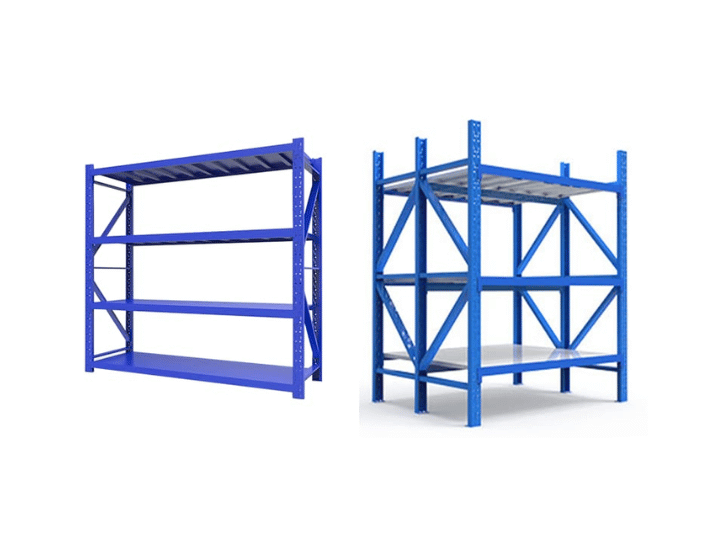
How Do You Choose the Best Storage Racks?
Efficient spatial management is the backbone of operational productivity, safety, and inventory control. Whether optimizing a bustling commercial warehouse, a retail stockroom, or a heavy-duty industrial facility, selecting the correct storage infrastructure is critical.
At Shop Solutions Midlands, we engineer premium, industrial-grade storage racks designed to maximize vertical space, streamline accessibility, and withstand demanding weight requirements. This comprehensive guide outlines the primary classifications of industrial shelving systems and helps identify the exact configuration your business requires.
What Types of Storage Racks Are Best for Commercial Warehouses?
Different storage environments require distinct engineering frameworks. Selecting the right architecture depends entirely on your inventory volume, item dimensions, and preferred retrieval methods.
1. Selective Pallet Racking Systems
Selective pallet racking is the most prevalent framework across modern supply chains. It provides immediate, unobstructed access to every individual pallet without needing to move adjacent stock.
- Best For: Facilities handling highly diversified stock-keeping units (SKUs) with high turnover rates.
- Key Benefit: Compatible with standard forklifts; requires no specialized handling equipment.
- Accessibility: 100% immediate selectivity.
2. Cantilever Racks for Oversized Materials
Standard shelving fails when dealing with long, awkward, or non-palletized inventory. Cantilever configurations feature open-fronted designs with extended support arms anchored to a rigid central column.
- Best For: Lumber, steel piping, plastic conduits, drywall sheets, and bulky furniture.
- Key Benefit: The lack of front vertical beams eliminates length constraints, allowing for seamless horizontal loading.
- Accessibility: Excellent for overhead crane or side-loader forklift access.
3. Drive-In and Drive-Through Racks
For high-density operations, drive-in systems utilize shared entry and exit lanes, allowing forklifts to physically drive inside the structural bay matrix to deposit loads on continuous side rails.
- Best For: Large quantities of uniform, non-perishable goods with low SKU differentiation.
- Key Benefit: Drastically minimizes aisle space, increasing storage density by up to 75%.
- Inventory Flow: Typically operates on a Last-In, First-Out (LIFO) or First-In, First-Out (FIFO) basis depending on dual-aisle configurations.
What Are the Key Structural Differences in Industrial Racks?
Understanding the technical specifications of your equipment ensures both structural longevity and workplace safety. The table below outlines how our core systems stack up at Shop Solutions Midlands:
| Storage System Type | Optimal Load Capacity (Per Level) | Primary Material Composition | Ideal Industry Vertical |
| Heavy-Duty Pallet Racks | 1,000 kg – 4,000 kg | Cold-rolled structural steel | Logistics, Third-Party Warehousing (3PL), Distribution |
| Cantilever Racking | 500 kg – 3,000 kg (per arm) | Heavy-gauge structural H-beams | Construction Supply, Manufacturing, Timber Yards |
| Longspan Shelving Units | 200 kg – 800 kg | Powder-coated steel with timber/steel decks | Retail Stockrooms, Automotive Parts, E-commerce Fulfillment |
Why Is Load Capacity Planning Vital for Workplace Safety?
Overloading a structural frame can lead to catastrophic system failures. When auditing your facility’s spatial requirements, two critical weight distributions must be accurately calculated:
Important Definitions:
- UDL (Uniformly Distributed Load): The total weight capacity assuming your inventory is perfectly leveled across the horizontal beams. Racking systems are rated strictly based on UDL.
- Point Loading: Concentrating weight onto a singular, isolated spot on the shelf. This must be avoided, as it causes beam deflection and structural warping.
Before installing hardware from Shop Solutions Midlands, verify the maximum weight profile of your heaviest pallet loads and cross-reference them with the maximum frame capacity of the upright columns.
How Can Longspan Shelving Optimize Manual Order Picking?
If your facility relies on manual inventory retrieval rather than forklift mechanics, Longspan shelving is the industry benchmark.
Longspan systems bridges the gap between light domestic shelving and heavy industrial pallet racks. They use a boltless lock-in design that allows warehouse staff to adjust shelf heights manually as inventory needs fluctuate. It is perfectly optimized for fast-paced e-commerce packing stations and automotive parts hubs.
What Are the Essential Maintenance Steps for Industrial Racking?
To maintain structural certification and protect your workforce, your facility must enforce a routine racking inspection protocol. Minor impacts from heavy machinery can compromise the load-bearing integrity of an entire bay.
Why Partner with Shop Solutions Midlands for Your Storage Infrastructure?
Optimizing space requires more than ordering generic steel frames; it demands precise spatial planning, high-grade materials, and reliable load-bearing engineering.
At Shop Solutions Midlands, we provide tailored workspace solutions built to last. Our heavy-gauge steel storage racks are finished with durable powder coatings to resist abrasions, chemical spills, and heavy wear in demanding industrial environments. From initial layout design to final structural implementation, we help turn disorganized floors into highly profitable, safe, and efficient vertical operations.


Leave a Reply