


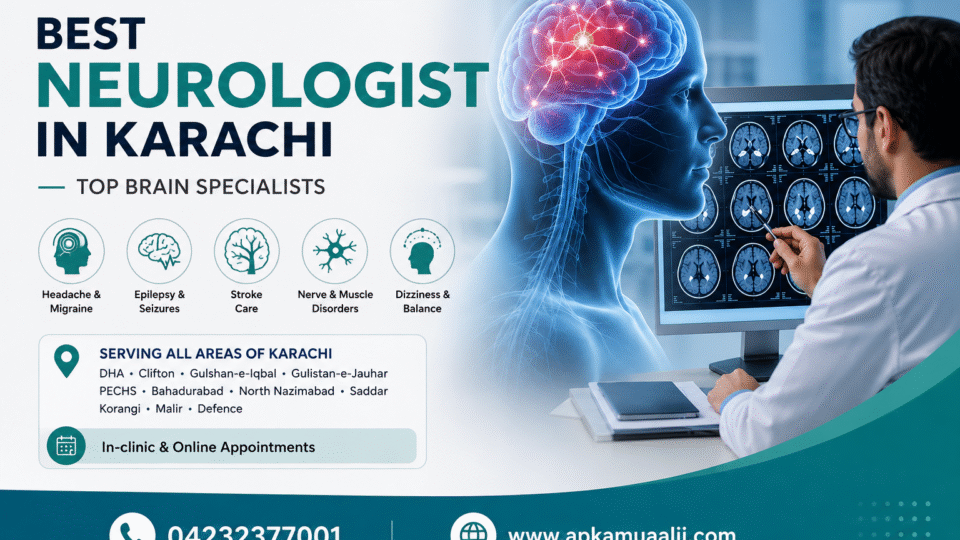
Best Neurologist in Karachi – Top Brain Specialists
Introduction
Brain and nerve problems can affect movement, memory, speech, balance, sleep, sensation and daily life. Some symptoms, such as repeated headaches or numbness, may develop gradually, while others—such as sudden weakness or difficulty speaking—can be medical emergencies.
A neurologist specializes in conditions affecting the brain, spinal cord, peripheral nerves and related muscles. Neurological disorders include conditions such as migraine, epilepsy, stroke, dementia, Parkinson’s disease, neuropathy, multiple sclerosis and other nervous-system disorders. WHO reports that neurological conditions are a major global cause of illness and disability.
If you are searching for the best neurologist in Karachi, the right choice should depend on your symptoms, the specialist’s qualifications and experience, the condition being evaluated, availability and the type of consultation you need.
Apka Muaalij provides an online platform where patients can search for neurologists and other specialists, review available doctor information and book consultations. Its Karachi neurologist directory currently lists neurologists with profiles that include specialties, qualifications, experience, ratings and appointment options.
What Is a Neurologist?
A neurologist is a doctor who specializes in diagnosing and treating disorders of the nervous system, including the brain, spinal cord and peripheral nerves.
Neurologists commonly evaluate:
- Migraine and other headaches
- Epilepsy and seizures
- Stroke and stroke-related problems
- Numbness and tingling
- Peripheral neuropathy
- Parkinson’s disease
- Memory and cognitive problems
- Multiple sclerosis
- Tremors
- Dizziness and balance problems
- Nerve compression
- Certain movement disorders
- Neuromuscular conditions
WHO classifies neurological disorders broadly to include epilepsy, headache disorders, neurodegenerative diseases, stroke, neuroinfections, neuromuscular disorders, traumatic brain and spinal-cord injuries and nervous-system cancers.
Neurologist vs Neurosurgeon: What Is the Difference?
A neurologist usually manages neurological conditions with medicines, monitoring, rehabilitation and other non-surgical treatments.
A neurosurgeon is a surgical specialist who treats certain disorders of the brain, spine and nervous system when an operation may be appropriate.
For example, a patient with persistent nerve symptoms may initially see a neurologist. If imaging identifies a condition that may require surgery, referral to a neurosurgeon may be considered.
What does a neurologist treat?A neurologist treats disorders involving the brain, spinal cord, nerves and related muscles. Common reasons for consultation include migraine, seizures, epilepsy, stroke, neuropathy, tremors, dizziness, memory problems, Parkinson’s disease and other neurological conditions.
Symptoms That May Need a Neurologist
Neurological symptoms can vary depending on which part of the nervous system is affected.
Common symptoms include:
| Symptom | Possible neurological concern |
| Frequent or severe headaches | Migraine or another headache disorder |
| Repeated seizures | Epilepsy or another seizure disorder |
| Numbness or tingling | Neuropathy or nerve compression |
| Muscle weakness | Nerve, muscle or brain disorder |
| Tremors | Movement disorder |
| Memory problems | Cognitive or neurological condition |
| Dizziness or imbalance | Vestibular or neurological problem |
| Speech difficulties | Neurological disorder, including stroke |
| Vision changes | Several neurological or eye-related causes |
| Difficulty walking | Nerve, brain, spinal or movement disorder |
Having one of these symptoms does not automatically mean that you have a neurological disease. A proper medical assessment is needed to identify the cause.
Conditions Treated by Neurologists
A neurologist may evaluate or manage conditions including:
Migraine
Migraine can cause recurring moderate-to-severe headaches and may be associated with nausea, vomiting or sensitivity to light and sound.
Epilepsy and Seizures
Seizures occur when there is abnormal electrical activity in the brain. Recurrent unprovoked seizures may require evaluation for epilepsy.
Stroke
Stroke occurs when blood flow to part of the brain is interrupted or a blood vessel in the brain bleeds. It requires urgent medical attention.
Peripheral Neuropathy
Peripheral neuropathy can cause numbness, burning, tingling, pain or weakness, often affecting the hands or feet. Diabetes is one possible underlying cause. Nerve-conduction studies and EMG may be used in some cases.
Parkinson’s Disease
Parkinson’s disease can affect movement and may cause symptoms such as tremor, stiffness and slowed movement.
Memory Disorders
A neurologist may evaluate persistent memory or cognitive changes to determine whether they are related to a neurological condition or another medical issue.
Causes of Neurological Problems
Neurological symptoms can have many different causes. Depending on the condition, possible causes include:
- Genetic factors
- Diabetes
- High blood pressure
- Blood-vessel disease
- Infections
- Autoimmune disorders
- Nutritional deficiencies
- Head or spinal injuries
- Tumors
- Nerve compression
- Certain medications or toxins
- Age-related neurological changes
The cause cannot always be determined from symptoms alone. A specialist may need to combine the medical history, neurological examination and appropriate diagnostic tests.
Risk Factors
Some neurological conditions have risk factors that can be modified, while others do not.
Potential risk factors include:
- Uncontrolled high blood pressure
- Diabetes
- Smoking
- High cholesterol
- Physical inactivity
- Excessive alcohol use
- Obesity
- Certain infections
- Previous head injuries
- Family history of neurological disease
- Increasing age
WHO notes that several modifiable risk factors contribute to the burden of neurological conditions, including important vascular and metabolic risks.
How Are Neurological Conditions Diagnosed?
Question: How does a neurologist diagnose brain or nerve problems?
Diagnosis usually starts with a detailed medical history and neurological examination. Depending on the symptoms, the doctor may recommend blood tests, brain or spine imaging, EEG, EMG, nerve-conduction studies or other investigations.
Common diagnostic tests include:
1. Neurological Examination
The doctor may assess:
- Reflexes
- Muscle strength
- Sensation
- Coordination
- Balance
- Walking
- Speech
- Eye movements
- Memory and cognition
2. MRI
MRI can provide detailed images of the brain and spinal cord. It may help identify problems such as stroke, tumors, inflammation, infection, traumatic injury and some other neurological disorders.
3. CT Scan
A CT scan may be used when rapid imaging is needed, including in certain emergency situations.
4. EEG
An electroencephalogram records electrical activity in the brain and is commonly used when evaluating seizures and some other brain-activity disorders.
5. EMG and Nerve-Conduction Studies
These tests can help evaluate nerve and muscle function and may be useful when symptoms suggest peripheral nerve disease or nerve compression.
6. Blood Tests
Blood tests may help identify medical conditions that can cause or contribute to neurological symptoms, such as diabetes or vitamin deficiencies.
What tests does a neurologist perform?Depending on the symptoms, a neurologist may use a neurological examination, blood tests, MRI, CT scan, EEG, EMG, nerve-conduction studies or other specialized investigations. The required tests depend on the suspected condition.
Treatment Options
Treatment depends on the diagnosis. There is no single treatment for all neurological disorders.
A neurologist may recommend:
- Prescription medicines
- Migraine prevention or treatment
- Anti-seizure medicines
- Medicines for movement disorders
- Treatment of underlying conditions
- Physiotherapy
- Occupational therapy
- Speech and language therapy
- Lifestyle changes
- Rehabilitation
- Regular follow-up
- Referral to a neurosurgeon or another specialist when appropriate
For example, treatment of neuropathy may focus on the underlying cause as well as symptom management, while stroke care may involve urgent treatment followed by rehabilitation. CDC notes that stroke recovery can require rehabilitation and that some patients may experience lasting effects.
Treatment should always be individualized. Do not start, stop or change neurological medicines without medical advice.
Prevention Tips
Not every neurological disorder can be prevented, but several healthy habits can support brain and nervous-system health.
Practical steps include:
- Keep blood pressure under control.
- Manage diabetes effectively.
- Avoid smoking.
- Maintain regular physical activity.
- Follow a balanced diet.
- Maintain a healthy weight.
- Get adequate sleep.
- Protect your head during risky activities.
- Attend recommended health checkups.
- Take prescribed medicines as directed.
- Seek medical attention for persistent or worsening neurological symptoms.
WHO emphasizes brain health across the life course and highlights prevention, healthy environments, physical health and access to quality care as important factors.
How can you protect brain health?You can support brain health by controlling blood pressure and diabetes, avoiding smoking, staying physically active, eating a balanced diet, getting adequate sleep, preventing injuries and seeking medical care for new or persistent neurological symptoms.
When Should You See a Specialist?
Consider consulting a neurologist if you have:
- Recurrent unexplained headaches
- Repeated seizures or seizure-like episodes
- Persistent numbness or tingling
- Unexplained muscle weakness
- Tremors
- Frequent dizziness or balance problems
- Persistent memory changes
- New movement problems
- Unexplained nerve pain
- Symptoms that are worsening or interfering with daily activities
Emergency warning: possible stroke
Some neurological symptoms require emergency care rather than a routine appointment.
Sudden:
- Face, arm or leg weakness or numbness, especially on one side
- Trouble speaking or understanding speech
- Vision problems
- Difficulty walking, dizziness or loss of balance
- Severe headache with no known cause
can be signs of stroke. CDC recommends getting emergency help immediately when these symptoms occur.
When is a neurological symptom an emergency?Sudden one-sided weakness or numbness, difficulty speaking, sudden vision problems, severe unexplained headache, or sudden loss of balance can indicate a stroke. Seek emergency medical care immediately rather than waiting for a routine neurologist appointment.
Where Can You Find the Best Neurologist in Karachi?
Patients looking for a neurologist near me in Karachi may search by area, symptoms, consultation type and doctor availability.
Neurologists may be available for patients living in or around:
- DHA Karachi
- Clifton
- Gulshan-e-Iqbal
- Gulistan-e-Jauhar
- PECHS
- Bahadurabad
- North Nazimabad
- Saddar
- Korangi
- Malir
- Defence
Patients from these areas can use Apka Muaalij to search available neurologists and review doctor profiles before booking an appointment. The platform’s Karachi neurologist directory includes information such as qualifications, experience, specialty, ratings and available consultation options.
For patients who cannot easily travel across Karachi, online consultation may also be an option when clinically appropriate.
Why Choose Apka Muaalij?
Choosing a neurologist should be based on your medical needs rather than simply searching for a doctor with the word “best” in the title.
Apka Muaalij can make the search process easier by allowing patients to:
- Search doctors by specialty
- Explore neurologist profiles
- Review qualifications and experience
- Check available consultation options
- Look for online consultations
- Find doctors in different Pakistani cities
- Book appointments through the platform
Apka Muaalij’s website provides doctor-search and appointment-booking functionality across multiple specialties and Pakistani cities, including Karachi, Lahore and Islamabad.
How do I choose a neurologist in Karachi?Look for a neurologist whose qualifications and clinical experience match your symptoms or condition. Also consider consultation availability, location, online or in-clinic options and the doctor’s profile. A doctor-booking platform such as Apka Muaalij can help you compare available specialists and arrange a consultation.
Frequently Asked Questions
1. Who is the best neurologist in Karachi?
There is no single neurologist who is objectively the best for every patient. The right specialist depends on your condition, symptoms, required expertise, experience and consultation needs. Apka Muaalij allows patients to explore neurologist profiles in Karachi.
2. What does a neurologist treat?
Neurologists treat disorders involving the brain, spinal cord and peripheral nervous system. These include migraine, epilepsy, stroke, neuropathy, Parkinson’s disease, tremors, memory disorders and other neurological conditions.
3. When should I see a neurologist for a headache?
You should consider specialist evaluation when headaches are recurrent, severe, unusual, worsening, associated with neurological symptoms or affecting your daily life. A sudden severe headache may require urgent assessment.
4. Can a neurologist treat migraine?
Yes. Neurologists can evaluate migraine and develop an appropriate treatment plan, which may include medicines, lifestyle measures and preventive treatment when needed.
5. Should I see a neurologist for numbness and tingling?
Persistent or unexplained numbness and tingling may require medical evaluation. Possible causes include nerve compression, neuropathy, diabetes and other conditions.
6. What is the difference between a neurologist and neurosurgeon?
A neurologist primarily diagnoses and medically manages neurological disorders. A neurosurgeon specializes in surgical treatment of certain brain, spine and nervous-system conditions.
7. Does every neurological problem require an MRI?
No. MRI is useful for many conditions, but it is not necessary for every neurological symptom. The doctor decides whether imaging is appropriate based on the history and examination.
8. Can I consult a neurologist online in Pakistan?
Online neurological consultation may be suitable for some symptoms, follow-up visits and medication discussions. However, emergencies and situations requiring physical examination or urgent testing need in-person medical care.
9. What should I take to my neurologist appointment?
Take previous medical reports, imaging results, laboratory reports, current medication details and a list of your symptoms. Note when symptoms started, how often they occur and what makes them better or worse.
10. How can I book a neurologist in Karachi?
You can search for neurologists in Karachi through Apka Muaalij, review available doctor profiles and choose an appropriate consultation option based on your needs.
Conclusion
Finding the best neurologist in Karachi is not simply about choosing the highest-rated or most frequently searched doctor. The most appropriate specialist depends on your symptoms, diagnosis, required expertise, experience and access to suitable care.
Neurological symptoms such as persistent headaches, seizures, numbness, weakness, tremors, memory problems and balance difficulties should not be ignored. Early evaluation can help identify the underlying cause and guide appropriate treatment.
For sudden symptoms suggestive of stroke—especially one-sided weakness, speech difficulty, sudden vision changes or severe unexplained headache—seek emergency medical care immediately
Need a neurologist in Karachi?
Book your appointment online through Apka Muaalij with a suitable specialist based on your medical needs, location and consultation preference.
Search neurologists in Karachi, compare available doctor profiles and book your consultation online today.
Apka Muaalij – Find the Best Doctors








Leave a Reply