


Calcium Sulfate Applications: Essential Material
Calcium sulfate is one of the most widely used mineral compounds in the construction and manufacturing industries. Known for its versatility, affordability, and reliable performance, this material plays a critical role in products such as cement and plaster of Paris. Found naturally in minerals like gypsum and anhydrite, calcium sulfate has become an essential component in modern building systems, offering both functional and economic advantages.
What is Calcium Sulfate?
Calcium sulfate (CaSO₄) is an inorganic compound that occurs naturally in several forms, most commonly as gypsum (CaSO₄·2H₂O) and anhydrite (CaSO₄). Gypsum, the hydrated form, is the most widely used due to its ease of processing and adaptability across applications. When heated, gypsum loses water and transforms into a hemihydrate form, which is commonly known as plaster of Paris.
This transformation is reversible, making calcium sulfate particularly useful in applications that require molding, setting, and hardening properties. Its non-toxic nature and abundance in nature further enhance its appeal for industrial use.
Role in Cement Production
One of the most critical applications of calcium sulfate is in the cement industry. During the manufacturing of Portland cement, a small percentage of gypsum is added to the clinker. This addition is not optional—it is essential for controlling the setting time of cement.
Without calcium sulfate, cement would set too quickly, making it difficult to handle and apply. Gypsum acts as a retarder, slowing down the hydration process of tricalcium aluminate (C₃A), a key compound in cement. This controlled reaction ensures that construction professionals have sufficient working time to mix, transport, and place the cement before it hardens.
In addition to regulating setting time, calcium sulfate also contributes to the overall strength and durability of cement. It helps produce a uniform and predictable hydration process, which is critical for maintaining structural integrity in construction projects.
Calcium Sulfate in Plaster of Paris
Another major application of calcium sulfate is in the production of plaster of Paris. This material is created by heating gypsum to remove part of its water content, resulting in a fine powder. When mixed with water, plaster of Paris forms a smooth paste that can be easily molded. As it dries, it rehydrates and hardens into a solid structure.
Plaster of Paris is widely used in construction for wall finishing, decorative elements, and false ceilings. Its quick-setting nature makes it ideal for applications that require fast turnaround times. Additionally, it provides a smooth and aesthetically pleasing surface, making it popular in interior design and architectural detailing.
Beyond construction, plaster of Paris is also used in medical casts, art sculptures, and mold-making processes. Its ability to capture fine details and set quickly makes it a preferred material in both industrial and creative fields.
Advantages of Calcium Sulfate
The widespread use of calcium sulfate is driven by several key advantages. First, it is readily available and cost-effective, making it accessible for large-scale industrial applications. Its natural abundance reduces the need for complex synthesis processes, lowering production costs.
Second, calcium sulfate offers excellent workability. In cement, it ensures manageable setting times, while in plaster of Paris, it provides smooth application and easy shaping. These properties are essential for efficiency in construction and manufacturing.
Third, the material is environmentally friendly compared to many alternatives. Gypsum can be recycled and reused, and synthetic gypsum produced as a byproduct of industrial processes (such as flue gas desulfurization) can also be utilized. This contributes to waste reduction and supports sustainable practices in the construction industry.
Other Industrial Applications
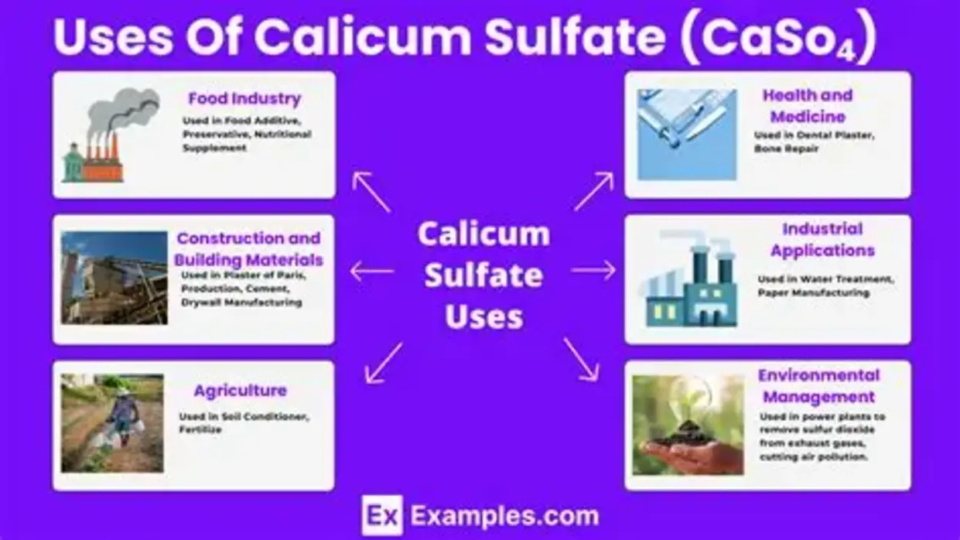
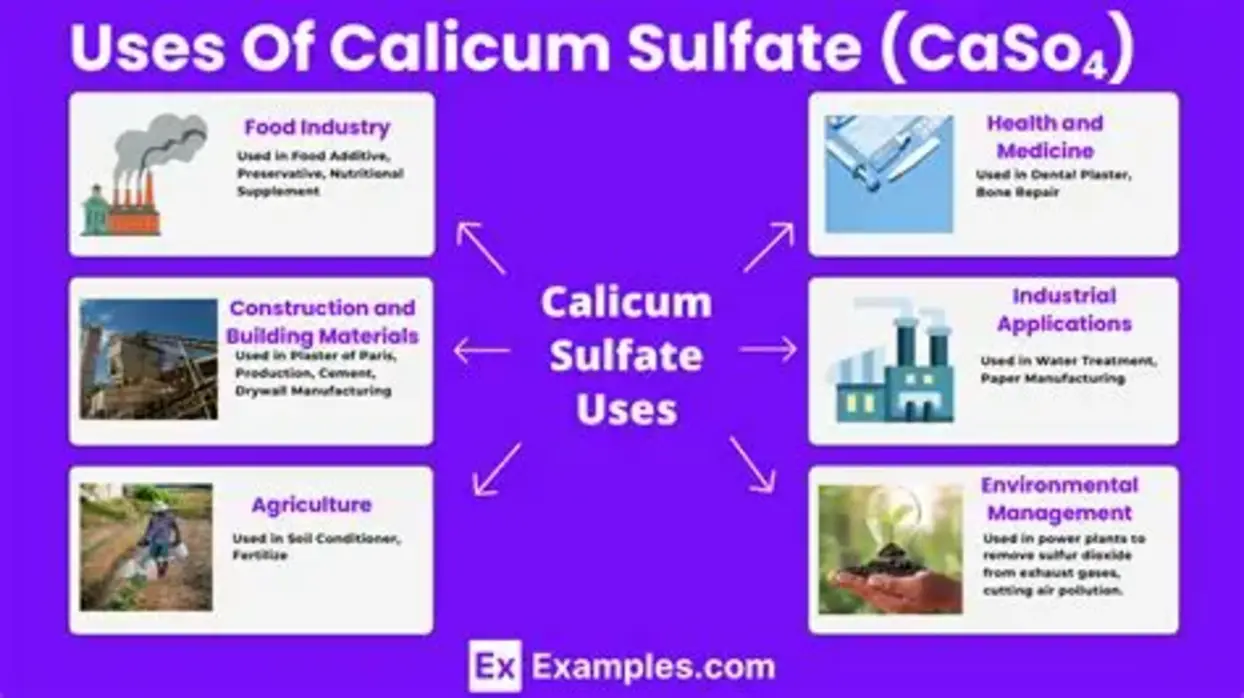
In addition to cement and plaster of Paris, calcium sulfate has a range of other applications. It is used in agriculture as a soil conditioner and fertilizer, helping to improve soil structure and supply essential nutrients like calcium and sulfur. In the food industry, it serves as a firming agent and coagulant in products like tofu.
Calcium sulfate is also used in the production of drywall, where gypsum boards provide fire resistance and sound insulation in buildings. Its non-combustible nature makes it a valuable material for enhancing safety in residential and commercial structures.
Challenges and Considerations
Despite its many advantages, the use of calcium sulfate is not without challenges. One of the primary concerns is moisture sensitivity, particularly in gypsum-based products. Excessive exposure to water can weaken the material and reduce its durability. Proper handling, storage, and application are essential to maintain performance.
Another consideration is quality consistency. Variations in raw material sources can affect the purity and performance of calcium sulfate. Reliable sourcing and quality control measures are crucial for ensuring consistent results, especially in large-scale construction projects.
Conclusion
Calcium sulfate remains an essential material in modern industry, particularly in cement production and plaster of Paris applications. Its ability to regulate setting times, provide structural stability, and offer versatility across multiple uses makes it indispensable in construction and manufacturing.
With growing demand for sustainable and cost-effective building materials, calcium sulfate continues to play a vital role in shaping the future of infrastructure. By understanding its properties, applications, and limitations, industry professionals can maximize its benefits and ensure high-quality outcomes in their projects.
This article publish by: belirangkalisari.id

Leave a Reply