


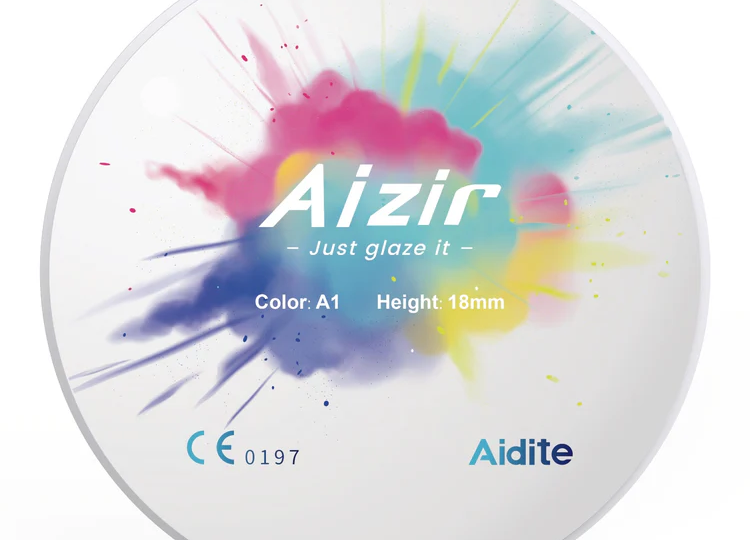
What to Check Before Buying Aidite Zirconia C3 Today
What Are the Key Things to Check Before Buying Aidite Zirconia C3
A zirconia disc may meet published specifications, yet issues appear once milling begins. Margins chip. Shade consistency shifts across batches. Sintering cycles behave differently than expected. These problems do not surface during purchase; they surface when deadlines are tight, and remakes are expensive.
This gap between datasheet claims and real lab behavior creates friction. Technicians spend time adjusting parameters instead of focusing on output. Small inconsistencies compound across cases, affecting both turnaround time and confidence in the material.
Aidite Zirconia C3 often comes up as a candidate material, but selection should not rely on brand familiarity alone. It demands a structured evaluation approach grounded in lab realities.
The following sections break down the critical checkpoints that experienced labs review before committing to Aidite Zirconia C3.
Material Composition and Phase Stability Review
Aidite Zirconia C3 requires close inspection at the composition level, particularly regarding yttria content distribution and phase balance between tetragonal and cubic structures. Labs working with multilayer zirconia must confirm whether the gradient between layers maintains structural integrity during sintering cycles. Variations in grain size and stabilizer distribution directly influence translucency and mechanical strength, which in turn affect case suitability. If the cubic phase dominates excessively in upper layers, fracture resistance may decline in high-load applications. On the other hand, insufficient cubic presence can limit esthetic output.
Evaluating Aidite Zirconia C3 from this perspective ensures that technicians are not relying on generalized material claims but instead aligning composition characteristics with clinical use cases.
Mechanical Strength and Milling Behavior
Aidite Zirconia C3 performance during milling often determines its practical viability in a lab setting. Even small inconsistencies in pre-sintered density can influence tool wear and edge stability.
Milling Resistance Patterns
Technicians should observe how Aidite Zirconia C3 responds to different tool paths and spindle speeds. Resistance levels that are too high increase burn wear, while lower resistance may indicate structural compromise. Consistent resistance across discs signals controlled manufacturing conditions.
Fracture Threshold Considerations
Mechanical testing data should be reviewed alongside real case feedback. Flexural strength values alone do not capture how the material behaves under dynamic loads. Aidite Zirconia C3 must demonstrate stable performance in thin margin areas and connector zones.
Rodin Sculpture 2.0 offers an interesting comparison point, particularly in hybrid workflows where printed components interact with milled zirconia structures. The contrast highlights how different material systems respond under stress.
Sintering Profiles and Thermal Response
Sintering remains one of the most sensitive stages when working with zirconia. Aidite Zirconia C3 requires alignment between furnace capabilities and recommended thermal curves to avoid distortion or unexpected shrinkage behavior.
Key checkpoints include:
- Heating rate consistency across furnace zones
- Holding temperature accuracy and duration
- Cooling rate control to prevent micro-cracking
- Shrinkage percentage validation against design compensation
Ignoring these factors can lead to dimensional inaccuracies that only appear after finishing. Aidite Zirconia C3 should be tested in controlled batches to verify predictable shrinkage outcomes before scaling production.
Rodin Sculpture 2.0 workflows often emphasize controlled curing environments, which parallels the importance of thermal discipline seen in zirconia sintering.
Optical Properties and Shade Layer Accuracy
Optical behavior in multilayer zirconia depends on more than shade labeling. Aidite Zirconia C3 must be evaluated for translucency gradients, light diffusion patterns, and color stability after sintering. Labs should verify whether the transition between cervical and incisal layers appears natural under different lighting conditions. Variations in layer blending can result in visible banding, particularly in anterior restorations.
Batch consistency also plays a role. Even slight deviations in pigmentation during manufacturing can lead to mismatch issues when cases are produced over time. Aidite Zirconia C3 should be assessed across multiple discs from different batches to confirm stability.
Rodin Sculpture 2.0 introduces another dimension when used in combination cases, where optical harmony between printed and milled components becomes critical. This reinforces the need for material-level evaluation rather than isolated testing.
Compatibility with Lab Workflow Systems
Integration into existing workflows often determines whether a material becomes a long-term option or a short-term trial. Aidite Zirconia C3 must align with CAD CAM systems, milling strategies, and finishing protocols already in place within the lab.
CAD CAM Integration Checks
Software libraries should be reviewed to confirm that Aidite Zirconia C3 parameters are properly supported. Incorrect presets can lead to scaling errors or margin inaccuracies.
Tooling and Equipment Alignment
Milling machines vary in spindle power and calibration standards. Aidite Zirconia C3 should be tested across the specific equipment used in the lab to confirm compatibility.
Key areas to verify include:
- Tool wear rates during extended runs
- Surface finish quality post milling
- Adjustment requirements during polishing
Rodin Sculpture 2.0 again provides a useful comparison, especially in labs balancing subtractive and additive workflows.
A structured compatibility check prevents workflow disruption and reduces the need for repeated calibration adjustments.
Cost Efficiency and Material Utilization Metrics
Material cost cannot be evaluated in isolation. Aidite Zirconia C3 must be analyzed based on yield per disc, waste percentage, and rework frequency. A lower upfront cost may not translate into better overall efficiency if failure rates increase.
Labs should track:
- Number of units produced per disc
- Percentage of remakes linked to material issues
- Time spent on post-processing adjustments
Aidite Zirconia C3 should demonstrate stable output across these metrics to justify its place in production. Rodin Sculpture 2.0 workflows often emphasize material efficiency in additive processes, offering a contrasting benchmark for evaluating waste and utilization.
Consistent performance across these indicators signals that the material aligns with operational goals rather than creating hidden costs.
Conclusion
Material decisions shape more than individual cases; they shape the entire workflow.
Aidite Zirconia C3 stands as a viable option only when it meets real lab conditions, not just theoretical benchmarks. From composition balance to milling response, every checkpoint discussed above serves as a filter against costly assumptions. Experienced labs rely on structured evaluation rather than surface-level comparisons, much like professionals who work with ecosystems such as Gro3X, where material selection connects directly to workflow outcomes.
Rodin Sculpture 2.0 further reinforces the need to assess materials within broader production systems. In the end, consistent results come from disciplined evaluation, not quick adoption.
Frequently Asked Questions (FAQs)
1. Is Aidite Zirconia C3 suitable for anterior restorations?
Yes, if optical gradients and translucency meet the lab’s esthetic requirements.
2. Can Aidite Zirconia C3 reduce milling tool wear?
It depends on pre-sintered density and consistency across batches.
3. Does Rodin Sculpture 2.0 replace zirconia materials?
No, it complements zirconia in hybrid workflows rather than replacing it.
4. Is sintering behavior predictable with Aidite Zirconia C3?
Predictability depends on furnace calibration and adherence to thermal profiles.
5. Can Aidite Zirconia C3 and Rodin Sculpture 2.0 be used together?
Yes, both can be integrated within combined additive and subtractive lab workflows.

Leave a Reply